 Agentdex
Blog · · Agentdex Editorial
Best AI App Builders in 2026: Lovable, Bolt, Replit and v0 Compared
Lovable (Agentdex profile), Bolt (Agentdex profile), Replit (Agentdex profile), and v0 (Agentdex profile) are the best AI app builders in October 2026 if you want to build AI-powered apps fast without deep coding knowledge. Lovable and Bolt suit full-stack web apps, Replit spans web plus iOS and Android, and v0 is strongest for polished UIs you wire to your own backend.
Key Takeaways
Pricing, limits, and feature sets change quickly across all four platforms. Always confirm current details on each tool's official site before committing.
AI app builders use machine learning and large language models for application development, and the primary advantages are speed and cost-effectiveness.
Agentdex is an independent directory of AI coding tools and isn't affiliated with these platforms. This comparison is based on each tool's official docs and pricing pages as of October 2026. Below: quick recommendations, a comparison table, a breakdown of each tool, and FAQs.
What are AI app builders in 2026, and why should devs care?
An AI app builder is a tool that turns natural language prompts into a working app - UI plus backend logic - so you can create apps with far less boilerplate than traditional development. These platforms enable users to create applications using natural language prompts, and they can generate code for both frontend and backend components automatically.
They differ from classic no-code app builders (drag-and-drop, locked templates) and from raw code editors in important ways: they generate real, exportable code, wire common services like auth and databases, and often ship to production-grade hosting. Many AI app builders integrate backend logic and database management automatically, and automated debugging features scan code for errors and suggest optimizations before you even notice them.
As of October 2026, most AI app builders create web apps by default. A subset can build iOS and Android apps, or at least responsive web apps that work well on a phone. You describe features in plain English, iterate through conversational prompts, and get a presentable first prototype quickly. That makes them great for rapid prototyping and fast user feedback, and they open software creation to non-developers.
Other tools in this space include Jotform's AI App Builder, Choicely (native iOS and Android apps), Base44, and Figma Make (apps generated from your design system). This article zooms in on Lovable, Bolt, Replit, and v0 because they're especially relevant to indie devs and AI coders building custom products, games, and internal tools.

Which AI app builder is best for you right now?
Here's the fast version: pick Lovable for full-stack SaaS-style apps you want looking polished from day one, Bolt for rapid experiments and AI agents, Replit for code-centric builders who want mobile reach, and v0 for production-quality UIs backed by your own services.
Feature | Lovable | Bolt | Replit | v0 |
|---|---|---|---|---|
Best for | SaaS dashboards, internal tools | Rapid prototypes, AI agents, bots | Code-centric builders, mobile reach | Polished frontend UIs, design systems |
Platform focus | Web apps (responsive) | Web apps, some mobile via Expo | Web apps, plus mobile via Expo | Web + iOS and Android (Expo) |
Code ownership | Full export, GitHub integration | Full export, flexible stack | Full code visible, collaborative | Code export, Git-connected |
Mobile options | Responsive web only | Expo/React Native; native builds need Expo's EAS | Guided App Store and Google Play publishing | Web-first; wrap for mobile yourself |
Learning curve | Beginner-friendly | Moderate (some coding experience helps) | Steeper for non-coders | Moderate (design mode helps) |
Notable strengths | Design polish, structured workflow | Speed to first result, iteration velocity | Own all code, external API freedom | UI quality, Vercel deployment |
For publishing to the App Store or Google Play, Replit has the most guided path, Bolt can generate Expo mobile apps, and v0 is strongest for web frontends. Indie hackers building a SaaS product should start with Lovable; solo game devs prototyping AI-driven tools should try Bolt or Replit; internal tool builders who need desktop and mobile access should evaluate Replit's flexibility.
How does Lovable work as an AI app builder?
As of October 2026, Lovable is an AI-first app builder focused on full-stack web apps. You describe the product you want to build, and Lovable scaffolds the entire repo - frontend, backend logic, database, auth - and sets up hosting. The core flow: prompt your idea, Lovable generates a Git repo, you iterate by chatting and editing code, then deploy to a managed environment.
Lovable emphasizes real code and developer ergonomics. Your project syncs to GitHub, so you get version control, code reviews, and long-term maintainability. The default stack produces clean, consistent UIs (React, Tailwind, shadcn/ui), which makes it appealing for SaaS-style dashboards, internal tools, and apps where you want AI to handle boilerplate while you tweak game logic or custom systems manually. You can connect payment processors, email, and data storage services without writing integration code from scratch.
The trade-off: Lovable is opinionated about its stack, so pulling in unusual frameworks may be harder. Native mobile app packaging is limited - you'll get a responsive web app, not an APK. Check Lovable's official docs for current hosting options and limits, as these change frequently.
Why might you pick Bolt as your AI-native dev environment?
Bolt is where vibe coding feels most natural. It's an AI-native coding workspace: you chat, the agent edits files, runs code, and deploys for you. Typical use cases include building small web apps, backend APIs, AI agents, Discord bots, and experimental tools - anything where speed to a first line of working code matters more than pixel-perfect design.
The development flow: describe what you want in plain language, let Bolt create the project structure and backend logic, run and debug directly in the browser-based IDE (powered by StackBlitz's WebContainers), and launch to the web. Simple builds can be working in minutes. You get more flexibility in stack choices than with some competitors, and adding "mobile app" to your first prompt gets you an Expo/React Native project.
The trade-off: token usage can escalate costs if you iterate heavily, and UI output can feel less polished than Lovable's defaults. More power and full control come at the cost of needing some coding experience to clean up generated code for production.
Where does Replit win as an AI app builder for web, iOS and Android?
Replit positions itself as an AI-powered coding platform that doubles as an app builder. Replit's AI app builder requires no coding experience to get started - you can prompt full-stack apps and refine them with an AI pair programmer inside the browser or on your phone. Replit allows app creation without writing code, though coders will extract more value.
Replit is especially strong for builders who want to own all the code, connect with external APIs directly, and target both web and native apps. Replit Agent can build Expo/React Native apps for iOS and Android that you test on your phone with Expo Go, and Replit's docs walk you through uploading to App Store Connect and publishing to Google Play. You'll need your own Apple and Google developer accounts.
Integrated cloud services include hosted repls, basic databases, file storage, and Replit includes built-in authentication systems for secure access. Collaboration features work like Google Docs for code, making it useful for a whole team during game jams or classroom projects. You can build AI powered apps whose backend logic calls models, third party tools, or external AI APIs - ideal for chatbots, AI agents, and procedural game tools.
What is v0 by Vercel, and how far does it go as an AI app builder?
v0 is Vercel's AI UI builder that generates React/Next.js components from prompts or sketches. Think of it as a focused way to get production-quality UIs rather than a full-stack walled-garden app maker.
v0 shines when you already like the Vercel/Next.js stack and want AI to handle frontends while you plug in your own backend logic - APIs, databases, auth - in a normal codebase. A typical workflow: prompt the UI for dashboards, portals, or admin panels; accept the generated code; customize visually and in code; deploy via Vercel; integrate with your AI or game backend on your own terms.
As of October 2026, v0 is web-first. It does not itself publish to the App Store or Google Play. Its Plus plan costs $30 per user per month and includes $30 of monthly credits per user, with usage billed against credits. It's ideal for builders who want full control of the repo and hosting stack while using AI as an accelerator. Check v0's pricing docs for current plans, since they change often.
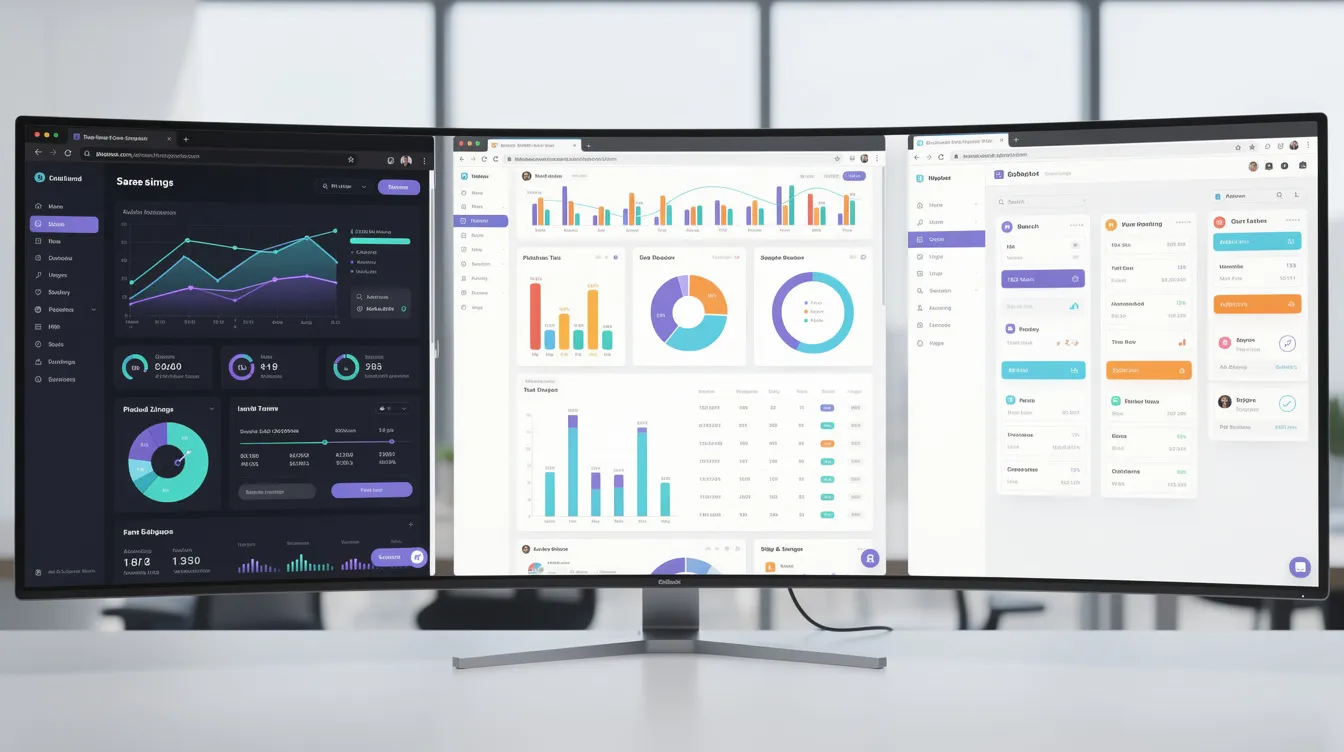
How do these AI app builders compare on control, speed, and learning curve?
Axis | Lovable | Bolt | Replit | v0 |
|---|---|---|---|---|
Speed to first prototype | Fast (plans first, then builds) | Fastest raw prototyping | Fast with Agent + templates | Fast UI generation |
Long-term control/ownership | GitHub sync, exportable code | Flexible stack, full export | Full code, self-hostable | Git-connected, Vercel deploy |
Learning curve | Low (beginner-friendly) | Medium (coding knowledge helps) | Medium-high for non-coders | Medium (design mode lowers barrier) |
Backend logic handling | Auto-generates auth, DB, payments | Strong, sometimes needs API keys | Full stack, server functions included | Frontend-focused, you wire backend |
Mobile story | Responsive web only | Expo mobile apps | iOS and Android via Expo | Web-first |
Best for non-coders | Yes | Partially | Possible but steeper | Partially |
Lovable and Bolt aim to keep you inside a single environment from idea to hosted app, while Replit and v0 lean more into AI superpowers for traditional coding workflows. None of these platforms lock you into a pure drag-and-drop world - all four expose real code so teams can refactor, test, and ship a real app rather than a disposable prototype. Your choice of app depends on how much backend logic you want auto-generated versus hand-crafted.
How should AI coders and indie/game devs choose an AI app builder?
If you're a solo dev, small studio member, or jam team builder who cares about speed but also about shipping weird, original experiences, here's how to decide:
Target platform: web only? Build iOS and Android too? If mobile storefronts matter, lean toward Replit (or Bolt if you're happy to handle Expo builds). If web is enough, any of the four work.
Backend complexity: for a small web-based management game or social tool, Lovable or v0 plus a simple backend may be ideal. For AI-powered NPC tooling or procedural content pipelines, Replit or Bolt integrate better with open-source libraries and external APIs.
Comfort with code: zero coding experience? Start with Lovable. Some JavaScript? Bolt or v0. Comfortable in a terminal? Replit gives you the most freedom.
Experiment with one or two tools on a weekend project. Build something tiny but real - not a tutorial todo app. See how quickly each platform lets you go from prompt to something fun, testable, and shareable. That's the tool you keep. Context switching between builders has a cost, so pick one main stack for your bigger projects and save time.
What's next for AI app builders, and how can you stay updated?
The space is moving fast as of October 2026: frequent model upgrades, new deployment targets, better third party integrations for payments and analytics, and growing support for native publishing to iOS and Android. Don't over-optimize for a single feature today because these tools differ now but will keep converging.
App builders are increasingly handling security defaults such as auth, data handling, and permissions, but you're still responsible for how your app treats user data. Check each platform's security docs before going live with sensitive data.
Want monthly updates on Lovable, Bolt, Replit, v0, and other AI coding tools, with honest reviews aimed at indie and game dev workflows? Join the free Model Pulse newsletter at agentdex.app/newsletter.
AI app builders get you past boilerplate so you can spend more time on core features, story, mechanics, and player experience. Pick a tool, build something this weekend, and watch your own app come to life.
FAQ
These questions cover edge cases and practical concerns not fully explored above.
Can I migrate a project from one AI app builder to another later?
Migration is possible but usually non-trivial. Tools that generate standard frameworks and expose repos - like Replit, Lovable, and v0-connected codebases - are easier to move than closed, purely visual builders. Export your code and data as early as possible if migration flexibility matters, and avoid heavy dependence on proprietary plugins you can't replicate elsewhere. Keep domain logic in modules you can copy between projects, keep your own content organized, and document any platform-specific assumptions.
Can these AI app builders publish directly to the App Store or Google Play?
As of October 2026, most AI app builders are web-first. Replit can build iOS and Android apps with Expo and has guided docs for App Store and Google Play submission; Bolt can generate Expo projects, but signed native builds happen outside the browser. A common alternative is a responsive web app that you wrap in a native shell or ship as a progressive web app. Treat "one-click publish" claims cautiously and check what's automated versus what still needs your own developer accounts.
How much coding knowledge do I really need to use these tools?
You can get a basic functional app running with mostly natural language in many builders, but shipping and maintaining a serious product is much easier if you understand web fundamentals - HTTP, databases, auth, basic JavaScript or Python. Non-coders should start with simple internal tools or prototypes and gradually learn from the AI-generated code. Use AI as an interactive tutor: ask it to explain generated files, functions, and patterns so your coding knowledge grows alongside your project. An app template can get you started, but customization requires some understanding.
Are AI app builders safe for apps that handle real user data?
Safety depends on both the platform and how you configure your app. Many builders offer role-based access, encrypted storage, and secure defaults, but you remain responsible for compliance with laws like GDPR or HIPAA. Replit includes built-in authentication. For sensitive use cases, consult a security professional rather than relying on marketing claims. Start with low-risk data (internal dashboards, non-sensitive prototypes) before trusting any AI app builder with personal or financial information, and keep apps private during development.
Will using an AI app builder lock me into a single vendor?
Vendor lock-in risk is lower when the platform lets you export or self-host standard codebases, and higher when your logic is stored as opaque visual flows or proprietary configs. Choose tools that prioritize open standards, Git access, and clear export options if long-term control matters. Periodically test your ability to run your project outside the builder's free hosting environment as a safeguard against future pricing or policy changes. Building on a free starter plan is a smart way to evaluate before committing budget to advanced features on any single platform.
Written by Agentdex Editorial. Agentdex is an independent directory reviewing AI coding tools; some links are affiliate links, marked as such (disclosure), and they never change our rankings. Prices and features are as of October 23, 2026, from official sources linked above. Always confirm on the vendor's site.